

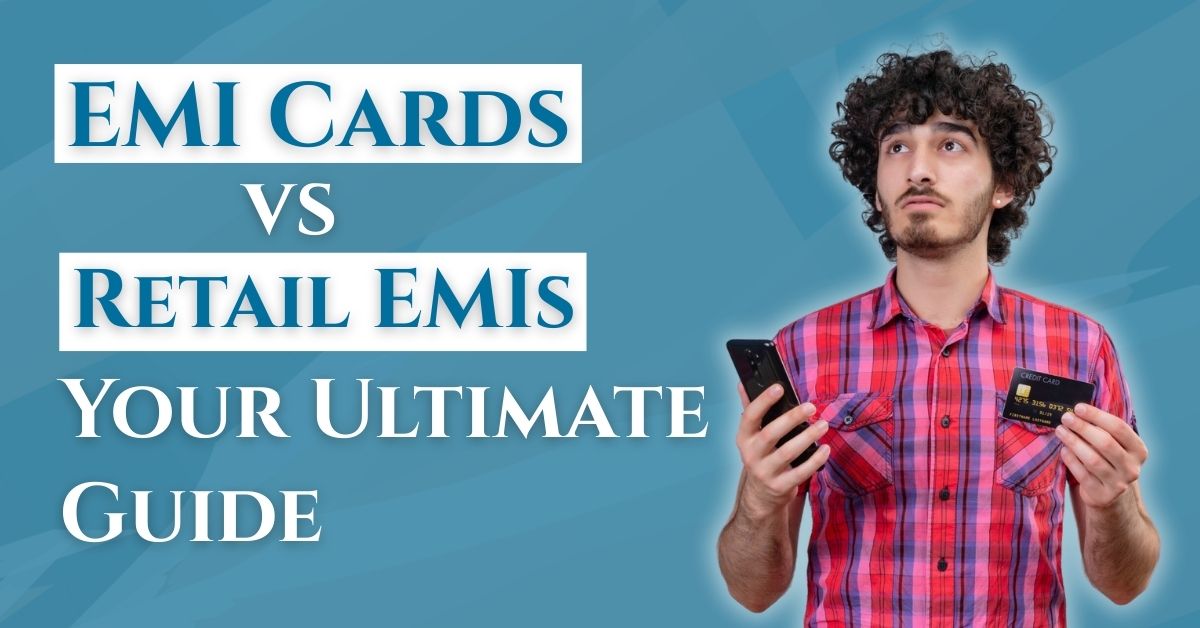
EMI Cards vs Retail EMIs: Your Ultimate Guide to Smart Buying in India
Have you ever found yourself overwhelmed after making a substantial purchase — a smartphone, appliance, or a piece of furniture — and then realising you would have to pay that much money in one large lump sum? Thanks to the idea of EMIs (Equated Monthly Instalments), this has become considerably easier in India because they enable consumers to break their payments into smaller monthly amounts so that they don’t experience financial difficulties.
However, with this convenience of EMIs comes an additional decision to be made: whether to use an EMI card or choose a retail EMI option. While both can be used for similar purposes (buying something now and paying later), they do so in different ways and have different functions that may appeal to particular types of consumers. Understanding these differences gives you the ability to make a better financial choice regarding which type of EMI option is right for you and your purchase.
Let’s break down everything you need to know, sans the jargon.
What exactly are EMI cards and retail EMIs?
EMI Cards
Think of EMI cards as cards specially designed to help you pay for purchases in instalments. Often issued by banks or financial companies, these cards work like a credit card but are primarily meant for EMI transactions. When you buy something using an EMI card from a partner retailer, the amount you spend is converted into fixed monthly payments for a set number of months, often with a lower interest rate than a standard credit card.
For example, the Bajaj Finserv EMI Card is one of the most popular options in India. You get instant approval and can use it at numerous electronics stores, furniture outlets, or online platforms that accept this card.
Retail EMIs
Retail EMIs, on the other hand, refer to turning your purchase into EMI directly during checkout, usually using your existing credit card or through financing offers provided by the store or third-party lenders. You don’t need a separate EMI card; instead, retailers and online sellers provide EMI options via payment gateways that split your payment into instalments.
This is the common way most people buy on EMI: at checkout on Flipkart, Amazon, or offline through banks’ credit cards, you simply select “pay in EMI” and choose your tenure. Some offers even come with No Cost EMI, meaning you don’t pay extra interest if you follow the terms.
How do EMI Cards work?
Using an EMI card is mostly straightforward. When you get an EMI card from a financial institution, it usually comes with a dedicated credit limit meant for EMI transactions. You swipe or use the card at partner stores, and the purchase automatically converts into EMI.
Here’s a simple flow:
- You select a product from a partner store or website.
- Pay by using your EMI card.
- Select the EMI tenure, say 6 or 9 months.
- The total amount is divided into equal monthly payments, which you repay through your billing cycle.
EMI cards often require a simple KYC process and credit check, but many offer instant approval based on your profile.
The benefits include relatively lower interest rates compared to regular credit cards and special discounts or cashback from partner retailers.
How Do Retail EMIs Work?
Retail EMIs use your existing credit card or other financing facilities without needing a new card. When you check out online or offline, you’re offered the option to pay via EMI, where the transaction gets divided into monthly instalments.
The process is:
- Identify a product.
- At payment, use the EMI option.
- Choose tenure: time that could be 3, 6, 9, 12 months, sometimes more.
- Payment confirmation.
The EMI gets charged monthly to your credit card bill, or if it’s a loan-based EMI from NBFCs, you receive a separate EMI schedule.
Retail EMIs can also be No Cost EMIs, where interest is either absorbed by the seller or included in the product price. These schemes depend heavily on offers running during sales or festival seasons.
Features making the EMI Card different from the Retail EMI
- Credit Limit: EMI cards have a separate credit limit designated for EMI purchases, so your regular credit card and daily purchases are unaffected. Retail EMIs use your existing credit card or debit card limits.
- Interest Rates and Processing Fees: EMI cards generally have lower interest rates and may not charge processing fees. Retail EMIs’ interest rates vary widely, and sometimes processing fees apply.
- Acceptance: You have to use EMI Cards only at certain stores or online platforms (i.e., Partner Stores). This limits the places you can buy things. Retail EMI is accepted by many online platforms, banks, and offline merchants, which gives you the best selection and choices for where you can shop.
- Approval Process: The process for getting your EMI Card may require you to fill out an application and do a small credit check, while most of these cards can be approved quickly. For Retail EMI, you will have access to your credit limit or the amount of money you are eligible to borrow, making it easier for you to get an EMI if you already own a card.
- Tenure Choices: Both the EMI Card and Retail EMI options provide multiple repayment terms, but Retail EMI (especially as found on Online Portals) sometimes offers long-term repayment terms of more than 24 months.
- Rewards and Discounts: EMI Cards may offer you access to special promotional offers and cash back with their partners. Retail EMI may take advantage of festive season promotions, No-Cost EMI offers, and other incentives to help their customers.
Benefits of Using EMI Cards
- Dedicated EMI Limit: With a separate EMI card, your day-to-day credit card usage remains unaffected. This helps in managing credit utilisation better.
- Easy Approval: Instant approval on many EMI cards means you can shop at partner outlets without lengthy paperwork.
- Lower Interest Rates: EMI cards’ interest rates often run cheaper than regular credit cards, making repayment more affordable.
- Special Offers: Many EMI cards provide exclusive discounts, cashback, and partner-specific deals that can make purchases cheaper.
- Simplified Repayment: EMI bills come separately from regular credit card bills, helping you monitor EMI repayments closely.
Disadvantages of EMI Cards
- Limited Acceptance in Retail Stores: You must use an EMI card only at approved retail partner locations, which restricts your access to sell.
- Independent tracking of EMI cards: The separation of EMI card payments from other credit card accounts and other forms of funding creates duplicate records and the possibility of confusion between the two sources of funding.
- No Reward Points: Spending on EMI cards generally earns few or no reward points compared to regular credit cards.
- Pre-activation Required: Many times, you need to activate or select the EMI tenure before purchasing, hence one extra step before completing your buy.
Advantages of Retail EMIs
- Easy Availability: The retail EMIs are accepted by a large number of offline and online stores in India, making it very handy.
- Access via existing cards: You don’t have a new card; you can use your regular credit card for buying on EMIs.
- Flexible Tenures and Offers: Many retailers extend different EMI tenures with No Cost EMI offers, sometimes even during festive sales.
- Longer Payment Periods: Some retail EMI plans offer repayment over extended periods, so you are comfortable with big purchases.
- Smooth Integration of Checkout: EMI options are integrated with payment gateways; all you do is select them at checkout with no additional paperwork.
Drawbacks of Retail EMIs
- Interest and Processing Charges Can Vary: Unless it’s a No Cost EMI, the interest rates can be pretty high. Certain schemes may include hidden charges or processing fees.
- Impact Credit Utilisation Ratio: Big EMIs on your credit card hike the credit utilisation, consequently impacting the credit score.
- Complex Terms on No Cost EMI: Promises of “No Cost” EMI can deceive if you don’t understand that the price may have embedded interest costs.
- Eligibility of Credit Card: An active, eligible credit card is required with a sufficient limit; EMI acceptance for the debit card is quite restricted.
Who should opt for EMI Cards?
EMI cards are ideal for frequent shoppers of electronics, appliances, or furniture from the same stores. If you want:
- A dedicated EMI credit line is kept separate from your daily expenses.
- Lower interest rates compared to regular credit cards.
- Quick Approvals and less documentation.
- Access to partner store-specific deals and cashback.
- In order to avoid mixing big purchases with your regular credit card bills.
For instance, EMI cards will be very useful for a homemaker replacing appliances or a technology enthusiast who frequently purchases gadgets from affiliate stores.
Retail EMIs: Who should opt?
Retail EMIs are ideal if:
- You already have one or more credit cards and want flexible EMI options.
- You shop mostly online, with access to festive sale offers and No Cost EMIs.
- You want longer EMI tenures-12 to 24 months.
- You can handle your credit card bills and EMIs in one statement comfortably.
- You want EMI options at a wide variety of merchants beyond specific partner lists.
A young professional buying a smartphone during Amazon’s Diwali sale, availing of the No Cost EMI on an existing credit card, will be a good example of retail EMI usage.
Practical Insights and Tips for Indian Consumers
- Check Total Cost, Not Just EMI Amount: Sometimes the monthly instalment seems low, but it might be because the tenure is too long. You may end up paying more in interest overall. Always check the total amount payable.
- Understand No Cost EMI: Often, it is only a marketing term; sellers either absorb interest cost or increase product price slightly. Always read the small print before trusting “no cost.”
- Essential or planned purchases can utilise EMI (Electronic Money Interface). The reason for this is that the impulse to purchase via EMI can lead to long-term EMIs becoming debt traps, particularly when the consumer has an income that varies from month to month.
- Make sure to track your EMIs and the dates that you owe the payments on. A missed payment will result in penalty fees being added to your account, as well as cause damage to your credit score.
- Be responsible with your credit. Try not to run your credit cards to their limits. Keeping your credit card usage low will contribute positively to your credit history and provide you with opportunities to obtain loans in the future.
- Keep an eye out for special offers from EMI card companies. Many stores will run promotions for those who use an EMI card to buy their products. This will allow you to save money.
- Do not purchase too many items using EMIs on different cards. By doing this, you are adding to your monthly expenses and can make it difficult to keep track of your finances each month.
Here are a few examples of how people use EMIs:
- New Washing Machine: Sunil needed a washing machine that cost ₹30,000. The store took Bajaj EMI cards, so he applied and was instantly approved for a ₹40,000 limit. He chose a 9-month payment plan with 13% interest. The EMI card lets him keep his regular credit card open and gives him a set payment schedule.
- Smartphone: Priya bought a ₹50,000 phone from Amazon during a sale. She used her SBI credit card for a 6-month, no-cost EMI. She didn’t have to pay extra interest, and the EMI helped her monthly budget.
- Furniture: Rajesh wanted ₹1,20,000 worth of furniture. The store offered an EMI through a Bajaj Finance loan at 18% interest for 18 months. It was easy for him because he didn’t need a new credit card, but the interest was higher. The longer payment time helped him manage his money, though.
In conclusion,
EMI cards and retail EMIs both let you buy expensive things by paying in instalments. Which one is better just depends on you, how you spend money, and your financial situation. If you want a separate credit line, maybe with lower interest and special deals, an EMI card could be a good option since you get simplicity and value. But retail EMIs could be better if you want to use your current credit card in flexible ways.
People in India are now smart shoppers, with plenty of ways to make good buying choices. Understanding how EMIs work, what their benefits are, and any cons will help you pick the one that works best for your budget, credit, and lifestyle. The main thing is to use EMIs carefully and not get into unnecessary debt. If you use them right, both EMI cards and retail EMIs can be great financial tools for you to buy what you need.





Leave a Reply