

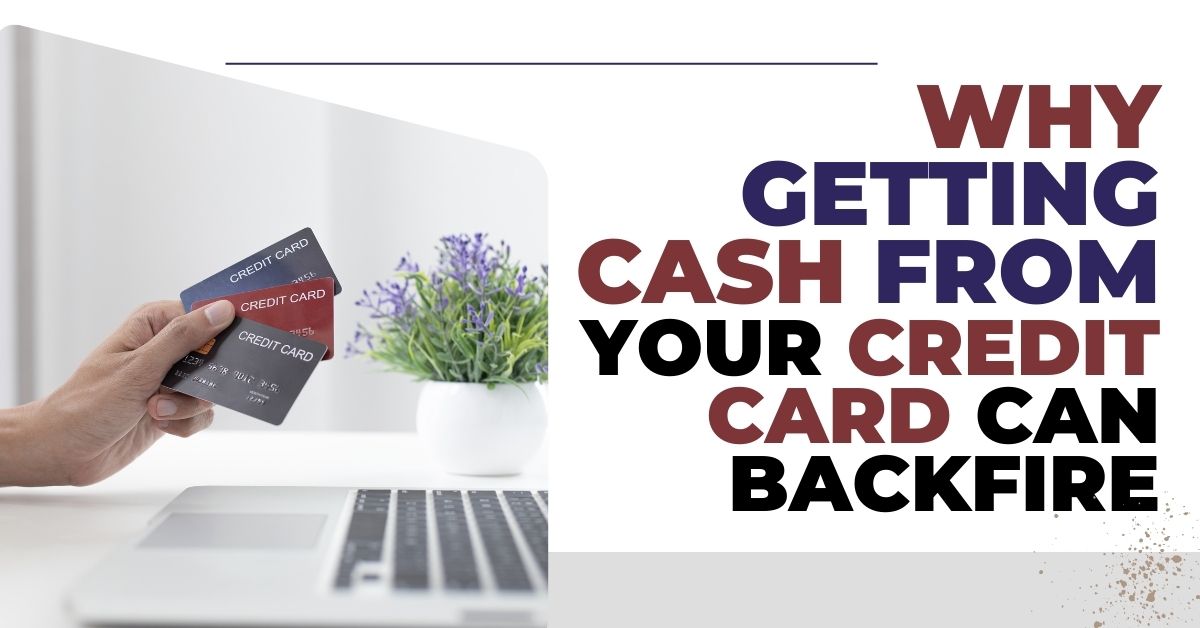
Why Getting Cash from Your Credit Card Can Backfire: A Heads-Up from a Money Pro
Credit cards are primarily used for making purchases without needing actual cash, deferring payments, and facilitating easy buying. They’re awesome if you use them the way they’re meant to be—for shopping, paying bills, and buying things online. However, many people don’t realise that using your credit card to withdraw cash changes the entire game. It’s not just another way to get money; it’s seriously one of the most expensive. How Your Electricity, Water, and Phone Bills Shape Your Credit Score in India
Think about this scenario: You’re eagerly awaiting your dream motorcycle or using a mortgage loan to expand your family’s home in busy Ghaziabad, or some other place in India. You’re excited and ready to go once you apply for the motorcycle or loan, but much to your disappointment, it gets rejected due to a “low credit history.” What stings even more? You realise it’s not just your credit card dues or EMI skips—it’s those forgotten electricity bills from BESCOM or unpaid Jio recharges piling up in the background. Shocking, right? In India, your utility and telecom bills aren’t just monthly annoyances; they’re silent architects of your financial future.
The Rules Have Changed: Your Utility Bills Now Shape Your Credit
For years, many of us have treated these bills like they were nothing, paying them late or trying to negotiate with the person who delivered them, and waiting until the last minute to respond to the disconnect notice. But here is the wake-up call: Since 2022, CIBIL and other bureaus have begun to report all types of utility and telecom bill payments, including Netflix, Airtel broadband, and municipal water fees, which is what will ultimately determine whether you have good credit ratings or not. When you pay your bills on time, it will positively impact your credit score, whereas late payments will cause you to experience a decline in your credit score. In this article, we will go into further detail about how these changes in the utility and telecom industry will affect your day-to-day life and provide you with the necessary tools to turn the bills that you are currently paying into a means of building credit. So, let’s get started and start working with your finances.
The Credit Score Puzzle: Why Utilities and Telecom Now Matter
The first thing you should know about your credit score is that it is a three-digit number that reflects how well you manage money (borrow and repay). The range of credit scores is generally from 300 to 900. And lenders will use this number when they decide whether or not to give you a loan, credit card, and, in some cases, an apartment rental in one of Mumbai’s glitzier areas. If your credit score is above 750, then congratulations – you’re on your way to financial success, but if it’s below 650, then you’ll likely experience many closed-door opportunities.
Traditionally, only formal credit, like loans and cards, counted. But India’s financial landscape exploded with UPI, digital wallets, and 1.2 billion+ mobile connections. Recognising this, the Reserve Bank of India (RBI) and bureaus introduced “alternative data” in utility payments. From August 2022, CIBIL began including telecom and utility payments in scores for millions. Why? Because they reveal your discipline with all financial obligations, not just bank loans.
Why One Missed Utility Bill Can Undo Years of Good Credit Behavior
Picture Ravi, a salaried professional in Bengaluru. He aced his home loan EMIs but let his BESCOM electricity bill linger for 90 days twice last year. His CIBIL score dipped to 680, killing his personal loan application. “I didn’t know power bills counted!” he told me. You’re not alone if that’s you—over 80% of Indians have utility/telecom accounts, yet few connect the dots to credit health.
The bills affect your score between 10 and 15 per cent through payment history, which has a 35 per cent weight and amounts owed, which has a 30 per cent weight. People who make regular payments show their trustworthiness, while those who default on payments present themselves as high-risk individuals. And with digital billing via apps like Paytm or BHIM, tracking is easier than ever—but so are the pitfalls.
Utilities Unpacked: Electricity, Water, and Gas Bills as Credit Gatekeepers
Depending on where you live in India, Utility costs can be anywhere between ₹1,000 – ₹5,000 per month (Electricity, Water and LPG/CNG) based on what your specific City and Life Style costs are. Providers such as State Electricity Boards (for example, MSEDCL for Maharashtra and DHBVN for Haryana) notify Credit Bureaus of delinquencies that exceed 90 days. If you fail to pay your Utility bill for three consecutive months, the missed payments will appear on your Credit Report for a period of up to seven years.
Take electricity bills. With rising tariffs, UPPCL in Uttar Pradesh hiked rates by 12% in 2025—bills shock us monthly. But apps like Tata Power or Adani Electricity let you pay via UPI instantly. Late fees? Sure, but repeated delays flag you as a defaulter. Real story: Priya in Delhi ignored her BSES Rajdhani bill during monsoons (fans off, right?). Three months later, her score fell 50 points, delaying her Bajaj Finserv loan.
How Everyday Utility Bills Can Make or Break Your Credit Score
Water bills from bodies like BWSSB (Bengaluru) or DJB (Delhi) work similarly. They’re often quarterly, sneaking up on you. Non-payment leads to penalties and disconnections, plus credit dings if overdue by 90+ days. Gas connections via Indraprastha Gas or Maharashtra Natural Gas? Same deal—providers share data with CRIF High Mark.
The reasons why this matters for your overall financial health. When you default, a cycle begins. In most cases, your low score will result in you having to pay higher interest rates for any future loans (18% instead of 10%), being denied rental applications, or possibly having issues getting hired in a financial sector job. But when you make timely payments, you can expect your credit score to increase anywhere from 20 to 50 points each year. With an increased score, you’ll qualify for lower interest rates and additional peace of mind.
Telecom Bills: Your Mobile and Broadband Secretly Building (or Breaking) Credit
India has the second biggest telecommunications subscriber base in the world, with more than 1.1 billion subscribers. Airtel, Jio, Vi and BSNL provide postpaid services starting at ₹200 and broadband services starting at ₹1500. All postpaid users should note that if their accounts remain unpaid for 90 days and exceed ₹100 in dues, the telecom will report this to the billing company.
Do you want Jio’s true 5G plans or Airtel Xstream fibre plan? With both services, you can set up automatic payments, but if you are low on funds (particularly during the holiday shopping season), your payment will be declined. All four bureaus reported by telecom companies are CIBIL, Experian, Equifax, and CRIF. A report published by Experian in 2024 indicated that 15% of millennials in large cities had falling credit scores because of unpaid debts owed to telecommunications companies.
Meet Karan from Pune, a freelancer glued to his Vi postpaid for client calls. He paid late thrice amid gig delays—his score tanked to 620, blocking a ₹2 lakh business loan from Razorpay. Prepaid? Safer, as it deducts upfront, but hybrid plans (prepaid with add-ons) can still report if ignored.
DTH and OTT like Tata Play or Disney+ Hotstar tied to bills? They count too if billed via telecom. The upside? Timely payments diversify your credit mix, showing you handle recurring debts beyond loans. In India’s gig economy, where 40% rely on digital payments, this builds a robust profile.
The Domino Effect: How Bill Delays Cascade into Bigger Financial Troubles
One late bill rarely dooms you, but patterns do. Here’s how it snowballs:
First, immediate hits. A 90-day delinquency adds a negative mark, dropping your score 30-100 points. Lenders see “high risk.”
Second, higher costs. Post-default, new loans cost more. A ₹10 lakh car loan at 9.5% (good score) vs. 14% (poor one) means ₹1.5 lakh extra interest over 5 years.
Third, life disruptions. Landlords in Noida or Gurgaon check CIBIL for rentals. Low scores? Higher deposits or outright nos. Insurance premiums rise too—IRDAI allows score-based pricing.
Finally, long-term drag. Marks linger 7 years, but consistent good behaviour fades them faster. During 2023’s rate hikes, defaulters paid 2-3% more on everything from SBI home loans to Flipkart EMIs.
Financial health isn’t just scores—it’s sleeping at night knowing emergencies won’t bankrupt you. Utilities/telecom teach discipline: Budget 10-15% of income here to avoid 50% of score woes.
Real-Life Wins: Stories of Indians Who Turned Bills into Credit Boosters
Stories create a deep emotional connection with others and have an immeasurable impact on our lives every day. Lakshmi is a teacher who lives in Chennai and takes care of TANGEDCO bills alongside other expenses related to her family. By choosing auto-pay through Google Pay, Lakshmi’s credit score increased from 690 to 780 within 18 months, allowing her to secure a significantly lower interest rate on an educational loan for her child’s schooling.
In Hyderabad, techie Arjun consolidated Airtel mobile and ACT broadband into one app. No misses, score up 60 points, approved for a ₹15 lakh HDFC personal loan at prime rates.
These aren’t outliers. A 2025 CIBIL study found utility payers saw 25% faster score recovery post-COVID. Your bills are low-hanging fruit—pay them right, reap rewards.
Smart Hacks: Pay Bills on Time and Supercharge Your Score
Ready to act? Start simple.
- Automate everything. Link UPI to apps like NoBroker Pay, UrPay, or provider portals. BESCOM, Jio, and even TPDDL support auto-debit—no forgetting Diwali spikes.
- Track proactively. Use apps like Cred, PhonePe, or Walnut for reminders. Set Google Calendar alerts for quarterly water bills.
- Budget wisely. Allocate ₹2,000-4,000 monthly in a zero-balance account for bills. Tools like Money View help forecast.
- Negotiate early. Facing shortfalls? Contact providers—many offer 7-15 day grace via apps. Avoid 90-day traps.
- Monitor your report. Get free annual CIBIL/Experian views. Spot errors? Dispute online—80% resolve in 30 days.
- Build positively. If scores are low, start with small wins. Prepaid telecom + on-time utilities diversify history fast.
Pro tip: During tax season, claim deductions under Section 80C for some utilities indirectly via home loans boosted by good scores.
Beyond Scores: Holistic Financial Health from Bill Discipline
Credit scores are gateways, but true health is broader. Timely bills curb impulse spending, build emergency funds (aim for 6 months’ expenses), and foster habits for investing in mutual funds or PPF.
In India’s inflation-hit economy (6%+ in 2025), discipline here frees cash for SIPs in Nifty 50 or gold ETFs. Families paying bills first report 20% less debt stress, per NFCC surveys adapted for India.
Think generational: Teach kids via pocket money “bills”—it wires financial smarts.
Your Next Steps to Bill-Proof Credit and Thrive
Your utility and telecom bills aren’t chores—they’re credit superpowers. Start today: Check one bill, set auto-pay, pull your CIBIL report. Watch your score climb, loans approve, and financial doors swing open.
In a country where 500 million dream of upward mobility, mastering these basics separates survivors from thrivers. Pay on time, stay informed, and own your financial story.
to borrow.
Money experts will tell you that taking cash out on your credit card—what they call cash advances—has a bunch of costs hidden under the surface that most people miss. We’re not just talking about the obvious fees here. You’re also looking at interest charges kicking in immediately, higher interest rates, and some tricky billing practices that can impact your credit score and the amount you can borrow later.
This guide will walk you through all those not-so-obvious costs of taking cash out using your credit card. We’ll look at how they stack up fast, how they can screw with your finances, and what you can do to seriously cut down those costs—or dodge them altogether.
What’s a Credit Card Cash Withdrawal, Really?
When you grab cash using your credit card, you’re using your card at an ATM or bank to get hard cash. Unlike using a debit card, where the cash is pulled from your own bank account, with a credit card, you’re borrowing that cash.
This borrowed cash is then tacked onto your credit card balance, and you’ve got to pay it back under conditions that are usually tighter and cost more to use the card to buy something.
What You See Right Away: Obvious Costs Cash Withdrawal Fees: How Bad Are They?
The first thing you’re gonna see when you take out cash with your credit card is the cash advance fee. Most credit card companies charge this as a slice of the cash you take out, but they always have a minimum fee set.
This fee hits your balance right away. There’s no wiggle room, no getting it waived if you pay it off fast, and no dodging it, even if you’re a super-loyal customer. Even taking out a tiny bit of cash will set off this fee, making it pricey from the get-go.
This fee may not seem like a huge deal by itself.
ATM and Bank Fees
On top of what your credit card company charges, the ATM or bank might slap on extra fees. These can change depending on the ATM, where in the world you are, and if you’re grabbing cash in another country.
If you’re taking out cash in a different country, you might also have to cough up money for:
- International ATM usage.
- Exchange rates for changing your money into local currency.
- Extra fees if you let the ATM handle the currency conversion for you.
All this stuff adds up, and you might not even notice how much it all costs until you actually see your credit card bill.
The Sneaky Cost: Interest Charges Starting Right Now
No Interest-Free Period
Here’s a big difference between swiping your card to buy something and taking out cash: you don’t get a break on interest with cash advances.
When you buy stuff with your credit card, you usually have a grace period where you don’t pay interest if you clear your balance by the due date. But that doesn’t apply to cash withdrawals.
You’re getting charged interest on cash withdrawals from day one—the day you take the cash, not when the bill shows up or when it’s due.
Higher Interest Rates
To make it worse, cash withdrawals come with higher interest rates than regular purchases. These rates are often the highest your card offers.
The higher rate is because pulling out cash is viewed as more of a risk. The credit card company thinks you’re more likely to screw up and not pay it back.
So, even a little delay in paying back the money can result in a lot of interest charges.
Interest Every Single Day
Interest on cash withdrawals is often calculated daily. That means they add interest onto your balance daily, and then figure out the interest on that new, bigger balance.
Calculating interest every day makes borrowing way more costly, especially if you don’t pay off the balance for a few months.
Even cardholders who are usually on top of everything might not see how fast the interest can add up.
Billing Problems and How Payments Are Counted
Where Does Your Money Go?
One of the most confusing things about credit card cash withdrawals is how your payments are used.
Often, when you send in a payment, the credit card company will put it toward the balances with lower interest rates, like regular purchases. That means your cash withdrawal balance, which is racking up a high interest, might stick around longer and keep piling on interest.
So, even if you’re making payments regularly, you might not be paying off the most expensive chunk of your debt right away.
Minimum Payments Are Tricky
The minimum payment on your bill might make you think you’re doing okay, but it’s not that simple. Just paying the minimum keeps your account in good standing, but the amount you have to pay due to the high interest on the cash withdrawal will keep building fast.
Over time, you can get stuck paying regularly but not really making progress on clearing the amount you borrowed.
How This Can Mess You Up for Good
Higher Credit Use and a Lower Credit Score
Taking out cash boosts your balance, which raises your credit utilisation ratio.
A high credit utilisation is one of the biggest things that can ding your credit score. Even if it’s only for a little bit, it can still drag your score down, especially if your balances are high when the credit card companies report to the credit bureaus.
A lower credit score can lead to higher interest rates on loans and make it harder to get approved for credit.
Higher Borrowing Costs, All Around
Because cash withdrawals come with fees, higher interest, and interest that adds up daily, they end up being way more expensive than almost any other way to borrow cash.
If you keep taking out cash, it’ll raise your whole borrowing cost and make it harder to handle your finances.
Lenders Might Think You’re Struggling
If you use a credit card for cash withdrawals, lenders might suspect you’re having money problems. When they dig into your credit history, some lenders see cash advances as a red flag.
That can make it harder to get loans approved, raise your credit limit, or land those fancy premium credit cards.
Less Wiggle Room Financially
Using your credit card for cash means you have less credit available for emergencies or other purchases. That can push you toward expensive ways to borrow, which can make your money issues even worse.
International Cash Withdrawals Are a Nightmare
Taking out cash with your credit card outside your home country can be super expensive. On top of the regular fees and interest, you might get hit with bad exchange rates and extra charges for using your card in another country.
All these costs can turn taking out cash into one of the worst money moves you can make when you’re travelling.
Why We Do It Anyway
Grabbing cash quickly can be appealing, but that can make it harder to see just how much borrowing will cost. Unlike when you buy something on your card, there’s no price listed when you take out cash.
That can trick you into not really thinking about how much you’ll have to pay back later.
When It’s Totally Necessary
Sometimes, you might have to take out cash, like in an emergency or if you’re somewhere that only takes cash.
Even then, the secret is to pay back the cash super fast to avoid a mountain of interest.
How to Dodge These Problems
Just Don’t Do It
Debit cards, savings accounts, or cheaper credit options are almost always the better way to go.
Pay It Back Fast
Paying back the money quickly will save you a ton on interest. Like, even a few days can make a big difference.
Know the Rules
Read up on all the details about the credit card company’s payment policies so you can be extra smart about how much each payment will affect you.
Have an Emergency Fund
Setting aside some cash for surprises helps you avoid relying on expensive credit.
Watch Your Statements
Check your statements regularly so you can jump on any cash-related charges early and keep the interest down.
They Tell You, But Are You Really Listening?
Credit card companies mention the costs of cash withdrawals in their fine print, but do you totally get it?
Understanding this stuff is important, so you don’t end up buried in debt.
Expert Advice
Credit card cash withdrawals might look super simple at first, but they can mess you up big time in the long run. All the extra fees and interest
From a money expert’s point of view, you should only use cash withdrawals as a last resort during an absolute desperate emergency.
The Bottom Line
Credit card cash withdrawals can be a lifesaver when you need cash in a hurry, but they charge a very high price. Knowing what you’re going to have to pay helps you protect your credit and stay in charge of your finances.







Leave a Reply